 Nourishing for Health





Nourishing for Health

-
Main Ideas
Learning Objective
Understand how everyday eating patterns influence energy, recovery, and long-term resilience through consistent nourishment rather than diets or short-term perfection.
Behavioral Objective
Begin recognizing how steady food choices, reduced reliance on heavily processed foods, and greater awareness during meals can gradually support more stable energy and daily well-being.
Key Thought
Long-term nourishment is shaped less by individual meals and more by the food patterns repeated consistently across everyday life.
-
Main Ideas
Learning Objective
Understand how everyday eating patterns influence energy, recovery, and long-term resilience through consistent nourishment rather than diets or short-term perfection.
Behavioral Objective
Begin recognizing how steady food choices, reduced reliance on heavily processed foods, and greater awareness during meals can gradually support more stable energy and daily well-being.
Key Thought
Long-term nourishment is shaped less by individual meals and more by the food patterns repeated consistently across everyday life.
-
Terms
- Gut-Microbiota-Brain (GMB) Axis
noun
The complex communication network linking the gut, microbiota, and brain. It influences mental and physical health through hormonal, immune, and neural pathways.
- Hidden Sugars
noun
Sugars added to processed foods under various names, such as high-fructose corn syrup, dextrose, or maltose, often contributing to excessive sugar intake unknowingly.
- Mindful Eating
noun
The practice of being present and fully aware of the experience of eating, focusing on hunger cues, taste, texture, and feelings of fullness to foster a healthier relationship with food.
- Nutrient Density
noun
The measure of how many nutrients a food provides relative to the number of calories it contains. Nutrient-dense foods are rich in vitamins, minerals, and other essential nutrients.
- Personalized Nutrition
noun
An individualized approach to diet and health, often using tools like DNA testing and microbiome analysis to tailor nutritional recommendations.
- Processed Foods
noun
Foods that have been altered from their natural state, often high in added sugars, unhealthy fats, and preservatives, contributing to inflammation.
- Superfoods
noun
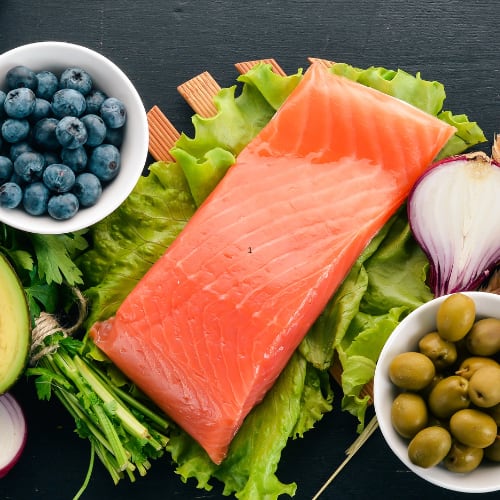
Superfoods are nutrient-dense foods believed to be particularly beneficial for health and well-being. They are often high in antioxidants, vitamins, and minerals. Common examples include blueberries, kale, nuts, seeds, and fatty fish like salmon.
- Whole Foods
noun
Foods that are minimally processed and as close to their natural form as possible, providing essential nutrients without added chemicals or artificial ingredients.
-
Terms
- Gut-Microbiota-Brain (GMB) Axis
noun
The complex communication network linking the gut, microbiota, and brain. It influences mental and physical health through hormonal, immune, and neural pathways.
- Hidden Sugars
noun
Sugars added to processed foods under various names, such as high-fructose corn syrup, dextrose, or maltose, often contributing to excessive sugar intake unknowingly.
- Mindful Eating
noun
The practice of being present and fully aware of the experience of eating, focusing on hunger cues, taste, texture, and feelings of fullness to foster a healthier relationship with food.
- Nutrient Density
noun
The measure of how many nutrients a food provides relative to the number of calories it contains. Nutrient-dense foods are rich in vitamins, minerals, and other essential nutrients.
- Personalized Nutrition
noun
An individualized approach to diet and health, often using tools like DNA testing and microbiome analysis to tailor nutritional recommendations.
- Processed Foods
noun
Foods that have been altered from their natural state, often high in added sugars, unhealthy fats, and preservatives, contributing to inflammation.
- Superfoods
noun
Superfoods are nutrient-dense foods believed to be particularly beneficial for health and well-being. They are often high in antioxidants, vitamins, and minerals. Common examples include blueberries, kale, nuts, seeds, and fatty fish like salmon.
- Whole Foods
noun
Foods that are minimally processed and as close to their natural form as possible, providing essential nutrients without added chemicals or artificial ingredients.
Introduction
Eating is one of the most consistent daily inputs the body receives, yet it is often approached through short-term thinking. Shifting the focus toward steady, repeatable patterns brings attention back to how nourishment actually supports energy, recovery, and daily balance over time.
Article Body Text
- 1,000 - 2,500 words (3.3 to 8.3 minutes to read)
- Minimum 3 Level 2 Headings
- Minimum 1 Level 2 Heading supported by a minimum of 2 Level 3 Headings
- Average 1 outbound authority link per 500 words to a credible health/wellness website
Food Choices Reflection
Objective: Evaluate current eating habits and identify areas for improvement.
- Keep a food journal for three days, tracking meals and snacks.
- Identify patterns in processed food intake, whole food consumption, and hydration.
- Reflect on changes that could improve nutrient balance and overall wellness.
Gut Health Challenge
Objective: Explore how diet influences the gut microbiome and digestive health.
- Incorporate probiotic and prebiotic foods into your diet for one week.
- Observe any changes in digestion, mood, or energy levels.
- Journal insights on how gut-friendly foods affect overall well-being.
Sugar Awareness Experiment
Objective: Identify hidden sugars in everyday foods and reduce intake.
- Review ingredient labels on five packaged foods in your home.
- List alternative whole-food options with less added sugar.
- Challenge yourself to swap one processed snack for a natural alternative daily.
Meal Planning for Wellness
Objective: Develop a balanced, whole-food meal plan.
- Create a three-day meal plan prioritizing whole foods and nutrient-dense ingredients.
- Ensure meals include a variety of proteins, healthy fats, and fiber-rich carbohydrates.
- Shop for ingredients and prepare at least one home-cooked meal from your plan.
Debunking Food Myths
Objective: Separate fact from fiction regarding common nutrition beliefs.
- Choose one common food myth (e.g., "Carbs are bad" or "Fat causes weight gain").
- Research scientific evidence supporting or debunking the claim.
- Summarize findings and share insights with a friend or family member.
A practical approach to eating well
You do not need to overhaul your entire diet at once. Many people begin by improving one meal, reducing reliance on highly processed foods, or paying closer attention to how certain foods make them feel. These adjustments are simple, but when repeated consistently, they begin to form a more supportive pattern.
Over time, these small changes become part of everyday life. Instead of relying on strict rules or short bursts of effort, nourishment becomes something steady, flexible, and sustainable within the flow of daily routines. For a deeper look at how modern eating patterns developed over time, see how everyday eating has changed over the past century.
In everyday conversations, these patterns are often grouped into familiar diet types such as plant-based, low-carbohydrate, or Mediterranean. While these labels can help organize different approaches, they do not always reflect how people actually eat across changing routines and real-world conditions. To better understand how these patterns are defined and commonly interpreted, see Diet Types Explained: What Common Eating Patterns Mean in Everyday Life.
With nourishment established as a daily foundation, the next module turns to movement and how regular physical activity supports energy, strength, and long-term adaptability across everyday life.
Course Outline
 Session Expired from Inactivity
Do you want to?



9618 Jefferson Highway, Suite D-191
Baton Rouge LA 70809-9636
(888) 424-0032 |
support@supplementrelief.com
* Disclaimer: This page is available exclusively for SupplementRelief.com clients. None of the information on this website is intended to replace your relationship with your healthcare provider(s). Nothing should be considered medical advice. The information, knowledge, and experience shared on this website are the opinions of SupplementRelief.com. This site and its content are intended to enhance your knowledge base as YOU MAKE YOUR OWN HEALTHCARE DECISIONS in partnership with your qualified health professional.
* These statements have not been evaluated by the Food and Drug Administration. These products and services are not intended to diagnose, treat, cure, or prevent disease.
* There is NO GUARANTEE OF SPECIFIC RESULTS for the products or services offered, and the RESULTS CAN VARY for each individual. Any results claimed by our customers are based on individual experiences that are unique and cannot be guaranteed.
FirstFitness Nutrition and NuMedica may be promoted and sold on the internet ONLY by Authorized Resellers who have been approved by and have registered their website domain with these companies. They strictly prohibit, and actively monitor, the UNAUTHORIZED SALE or RESALE of their products in ALL online public shopping portals including Amazon, eBay, and others and into other countries. All products purchased in SupplementRelief.com are for PERSONAL USE ONLY and CANNOT BE RESOLD to others. Please report violations of Reseller Policy directly to FirstFitness Nutrition at 800.621.4348 and to NuMedica at 800.869.8100.
The content and photographs on this website are copyrighted or Licensed Material and may not be downloaded for other than personal use. Republication, retransmission, reproduction, or any other use of the content or photographs is prohibited. ©2010-2024 SupplementRelief.com.
Are you sure you want to remove this item?