 Foundation 2: Moving Your Body





Foundation 2: Moving Your Body

-
Main Ideas
Learning Objective
Understand how consistent daily movement influences strength, energy, and long-term physical function.
Behavioral Objective
Begin incorporating small, repeatable forms of movement into daily routines to support consistent activity over time.
Key Thought
Regular daily movement, even in small amounts, plays a key role in shaping long-term physical well-being.
-
Main Ideas
Learning Objective
Understand how consistent daily movement influences strength, energy, and long-term physical function.
Behavioral Objective
Begin incorporating small, repeatable forms of movement into daily routines to support consistent activity over time.
Key Thought
Regular daily movement, even in small amounts, plays a key role in shaping long-term physical well-being.
-
Terms
- Cardiovascular Health
noun
The health and function of the heart and blood vessels, improved through regular physical activity, which helps reduce the risk of heart disease and related conditions.
- Flexibility Exercises
noun
Activities that enhance the range of motion of muscles and joints, such as yoga or stretching, promoting mobility and reducing the risk of injury.
- High-Intensity Interval Training (HIIT)
noun
A form of exercise that alternates short bursts of intense activity with periods of rest or lower-intensity activity, known for improving cardiovascular health and metabolic function.
- Mindful Movement
noun
Activities like yoga or Pilates that combine physical movement with mental focus and relaxation techniques.
- Strength Training
noun
Exercises designed to improve muscular strength and endurance, often involving weights or resistance bands. It helps increase muscle mass, bone density, and metabolic rate.
-
Terms
- Cardiovascular Health
noun
The health and function of the heart and blood vessels, improved through regular physical activity, which helps reduce the risk of heart disease and related conditions.
- Flexibility Exercises
noun
Activities that enhance the range of motion of muscles and joints, such as yoga or stretching, promoting mobility and reducing the risk of injury.
- High-Intensity Interval Training (HIIT)
noun
A form of exercise that alternates short bursts of intense activity with periods of rest or lower-intensity activity, known for improving cardiovascular health and metabolic function.
- Mindful Movement
noun
Activities like yoga or Pilates that combine physical movement with mental focus and relaxation techniques.
- Strength Training
noun
Exercises designed to improve muscular strength and endurance, often involving weights or resistance bands. It helps increase muscle mass, bone density, and metabolic rate.
Introduction
Movement supports strength, circulation, energy, and adaptability across the lifespan. This foundation emphasizes regular daily activity rather than intensity, helping establish movement as a normal and sustainable part of life.
Introduction
Alongside nourishment, movement is a constant part of daily life. The body is designed to move regularly, yet modern routines often reduce natural opportunities for activity.
Rather than viewing movement as something separate or occasional, this foundation focuses on how the body moves throughout the day. These repeated patterns influence how the body maintains strength, energy, and flexibility over time.
Understanding movement as a daily pattern helps make it more consistent and sustainable.
The core idea
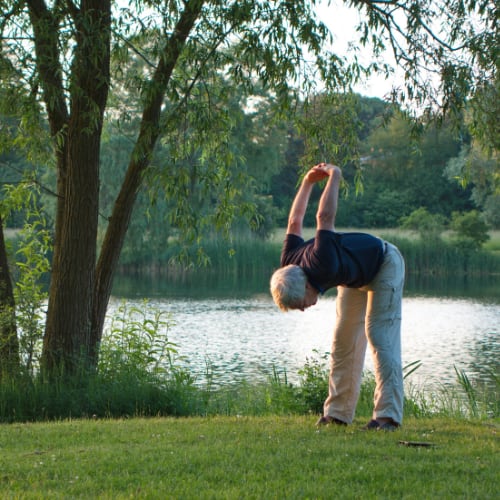
Moving your body means engaging in regular, repeated activity that supports how the body functions. This includes both structured exercise and the movement that occurs naturally throughout daily life.
Consistency plays a greater role than intensity. Small, repeated movements provide signals that help the body maintain strength, coordination, and circulation.
When movement is infrequent or limited, the body gradually adapts to lower levels of activity, shaping a different long-term pattern.
How this appears in everyday life
Daily movement patterns are often shaped by routine. Work may involve long periods of sitting, while transportation and technology reduce the need for physical effort in many tasks.
At the same time, movement can be built into daily life through walking, standing, stretching, or planned activity. These small actions may not seem significant on their own, but they contribute to a consistent pattern over time.
The key is not whether movement is intense, but whether it is repeated regularly as part of everyday routines.
Why it matters over time
Regular movement supports the body's ability to adapt and respond to daily demands. Consistent activity helps maintain strength, energy, and overall function.
This foundation also reinforces the importance of sustainability. Movement that fits naturally into daily life is more likely to be repeated and maintained over time.
As these patterns continue, they contribute to long-term resilience by supporting how the body moves and responds across the lifespan.
Key ideas
- Movement is a daily pattern that influences strength, energy, and overall function.
- Consistency matters more than intensity when building sustainable movement habits.
- Modern routines often reduce natural opportunities for regular activity.
- Small amounts of movement repeated daily can support long-term well-being.
Movement Journal
Objective: Increase awareness of daily physical activity patterns and identify areas for improvement.
- For one week, keep a daily journal of all physical activities you engage in, including walking, exercise, and household tasks.
- Note the type, duration, and intensity of each activity.
- At the end of the week, review your journal to identify patterns and areas where you can incorporate more movement into your routine.
Create a Weekly Movement Plan
Objective: Develop a structured plan to incorporate diverse forms of physical activity into your week.
- Design a weekly exercise schedule that includes a mix of cardio, strength training, and flexibility exercises.
- Set specific goals for each day, such as a 30-minute walk on Monday, a yoga session on Wednesday, and a HIIT workout on Friday.
- At the end of the week, reflect on how well you adhered to your plan and adjust your schedule as needed for the following week.
Explore New Activities
Objective: Expand your physical activity repertoire by trying new exercises and activities.
- Choose one new physical activity to try this week, such as a dance class, a different form of cardio, or a new outdoor sport.
- After participating, note your experience in terms of enjoyment, difficulty, and how your body feels afterward.
- Reflect on whether you would like to incorporate this new activity into your regular routine and how it benefits your overall wellness.
Course Outline
 Session Expired from Inactivity
Do you want to?



9618 Jefferson Highway, Suite D-191
Baton Rouge LA 70809-9636
(888) 424-0032 |
support@supplementrelief.com
* Disclaimer: This page is available exclusively for SupplementRelief.com clients. None of the information on this website is intended to replace your relationship with your healthcare provider(s). Nothing should be considered medical advice. The information, knowledge, and experience shared on this website are the opinions of SupplementRelief.com. This site and its content are intended to enhance your knowledge base as YOU MAKE YOUR OWN HEALTHCARE DECISIONS in partnership with your qualified health professional.
* These statements have not been evaluated by the Food and Drug Administration. These products and services are not intended to diagnose, treat, cure, or prevent disease.
* There is NO GUARANTEE OF SPECIFIC RESULTS for the products or services offered, and the RESULTS CAN VARY for each individual. Any results claimed by our customers are based on individual experiences that are unique and cannot be guaranteed.
FirstFitness Nutrition and NuMedica may be promoted and sold on the internet ONLY by Authorized Resellers who have been approved by and have registered their website domain with these companies. They strictly prohibit, and actively monitor, the UNAUTHORIZED SALE or RESALE of their products in ALL online public shopping portals including Amazon, eBay, and others and into other countries. All products purchased in SupplementRelief.com are for PERSONAL USE ONLY and CANNOT BE RESOLD to others. Please report violations of Reseller Policy directly to FirstFitness Nutrition at 800.621.4348 and to NuMedica at 800.869.8100.
The content and photographs on this website are copyrighted or Licensed Material and may not be downloaded for other than personal use. Republication, retransmission, reproduction, or any other use of the content or photographs is prohibited. ©2010-2024 SupplementRelief.com.
Are you sure you want to remove this item?